

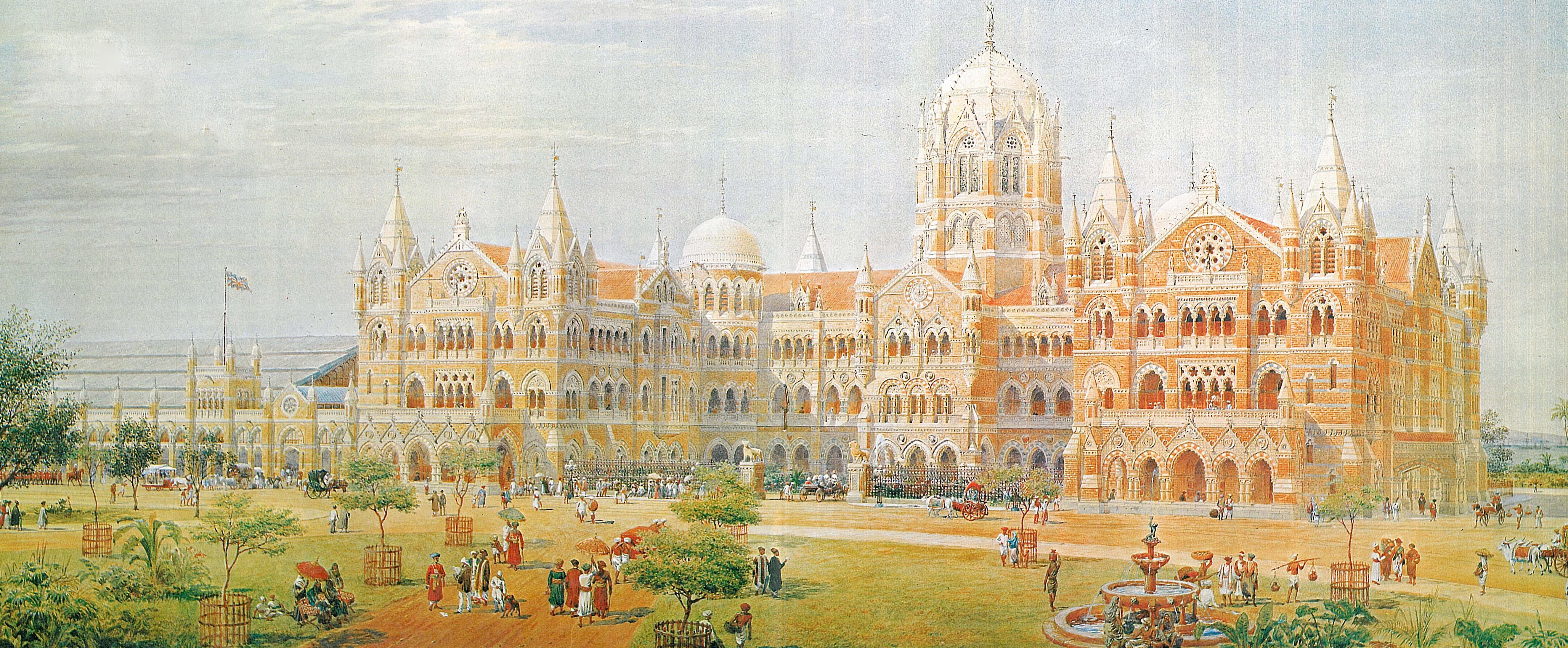
Construction of the station began in 1878 and spanned a decade, with final costs reaching 1,614,000 rupees—an extraordinary investment at the time, equivalent to over 2 billion rupees today. Designed by Frederick William Stevens, the building fused Victorian Gothic Revival with Indo-Saracenic motifs, incorporating pointed arches, turrets, and domes that reflected both European and Indian architectural traditions. As the principal terminus for Bombay—then a major port and commercial hub—it served as a logistical keystone in the Empire’s railway network, facilitating the movement of goods, troops, and officials across the subcontinent. Its scale and ornamentation underscored the administrative and economic significance of Bombay within British India, and the station itself became a symbol of imperial connectivity, technological prowess, and urban modernity.

