

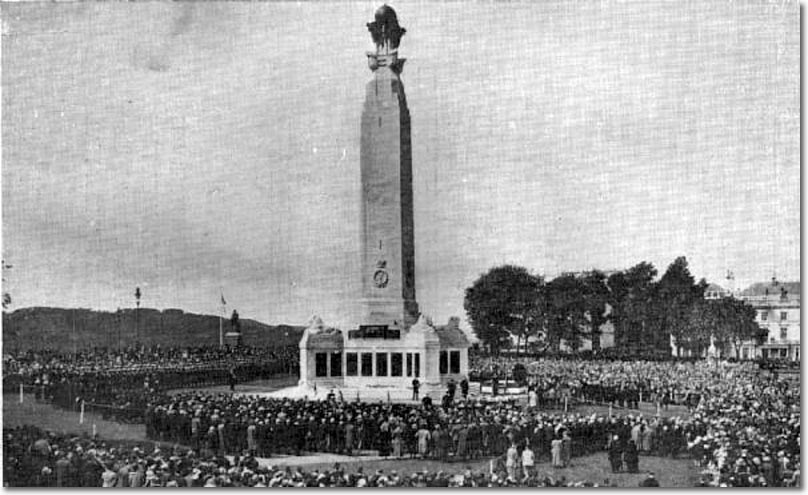
The Plymouth Naval Memorial is one of three major memorials erected to commemorate Royal Navy personnel who died at sea or have no known grave. Along with its counterparts at Portsmouth and Chatham, it was designed to provide a permanent record of those lost in the First World War, when the nature of naval warfare meant that many casualties could not be recovered. The original structure, visible in the earlier photograph, was unveiled in 1924 and followed the Commission’s principles of dignity, uniformity and clear architectural form.
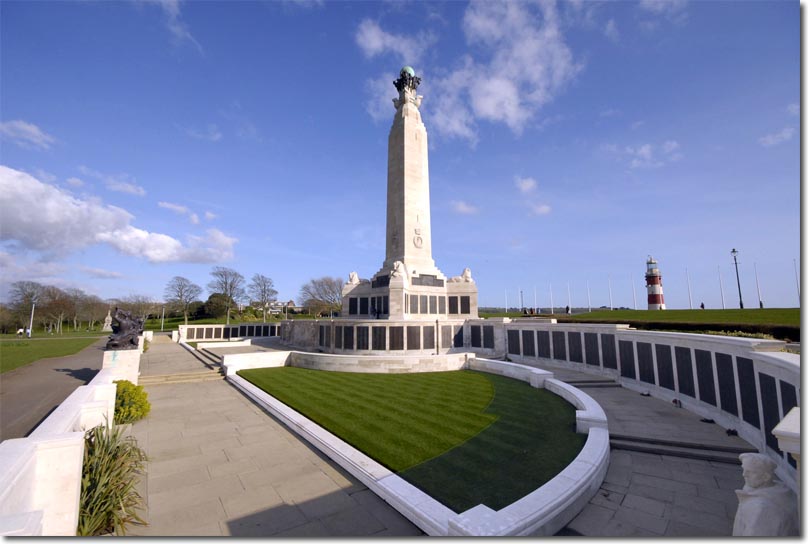
The memorial quickly became a focal point for commemoration in the West Country, but the scale of losses during the Second World War required a significant expansion. By 1945 the number of names to be added far exceeded the available space on the original panels. The solution was to extend the memorial with new walls and bronze name panels, creating a larger complex that preserved the original design while accommodating the additional inscriptions. This approach mirrored the adaptations made at Portsmouth and Chatham, ensuring that all three memorials remained consistent in appearance and purpose.
The names recorded at Plymouth represent sailors from a wide range of ships and operations, including those lost in the Atlantic, Arctic, Mediterranean and Far Eastern theatres. The memorial therefore reflects the global nature of naval warfare and the fact that many casualties were never recovered. Its position on The Hoe, overlooking Plymouth Sound, reinforces the connection between the city, the Royal Navy and the sea itself.
Today the Plymouth Naval Memorial stands as a combined record of both world wars, its layered construction illustrating how commemoration had to evolve to meet the demands of a second global conflict. The addition of the later panels did not alter the original purpose of the memorial: to provide a permanent and equal record of those who have no grave but the sea.

