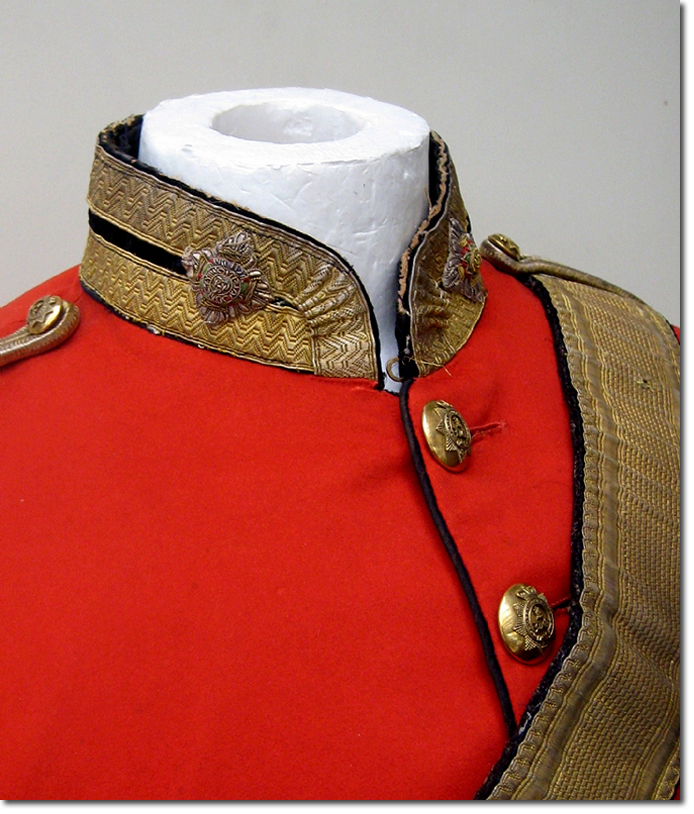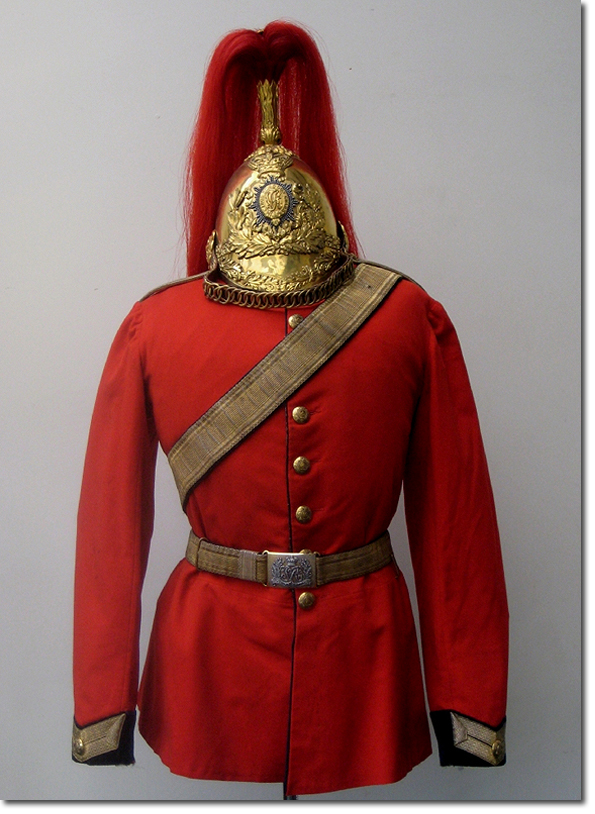
The Dress Regulations for officers have similar descriptions of the tunic for heavy cavalry in both the 1855 and 1861 books but with some small differences. In 1855 there were nine buttons down the front and in 1861 eight buttons. The velvet collar (see below) was two and a half inches deep in 1855 and 2 inches only in 1861. It was rounded at the front and had a gold lace edge along the top and front for subalterns and captains, and the addition of gold lace along the bottom of the collar for majors, lieutenant-colonels and colonels. Cornets had an embroidered star badge, lieutenants a crown and captains a star and crown. Majors had a star badge on their extra laced collar, lieutenant-colonels a crown and colonels a star and crown.
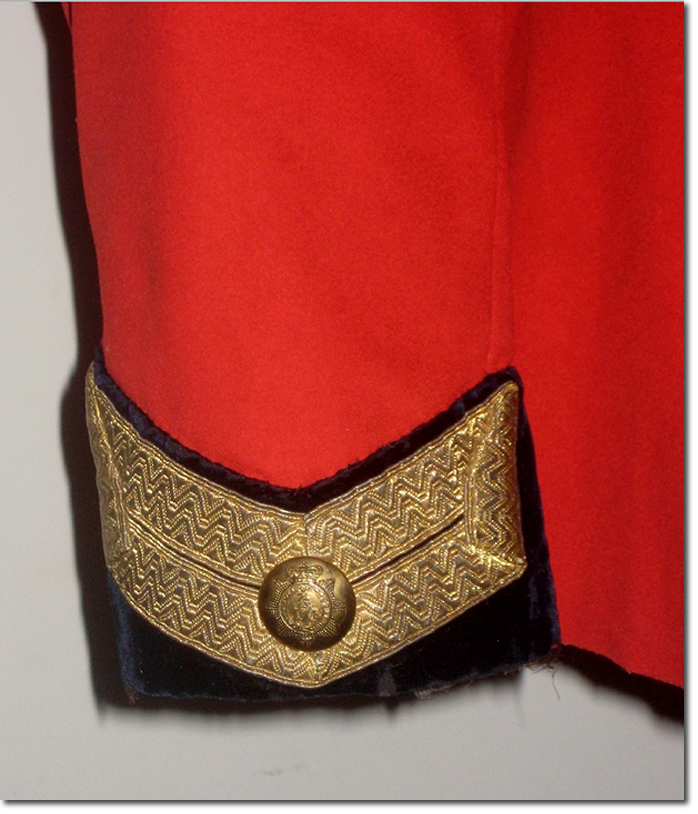
The shoulders had a simple doubled gold cord with a small regimental button. The facings included a slim blue velvet edge to the front of the tunic, and cuffs that followed the shape of the gold chevron button loop. The 1861 Regulations say, ‘Round cuff ten and a half inches in circumference, with a loop of three-quarter-inch gold lace, six inches long, and one button in centre.’
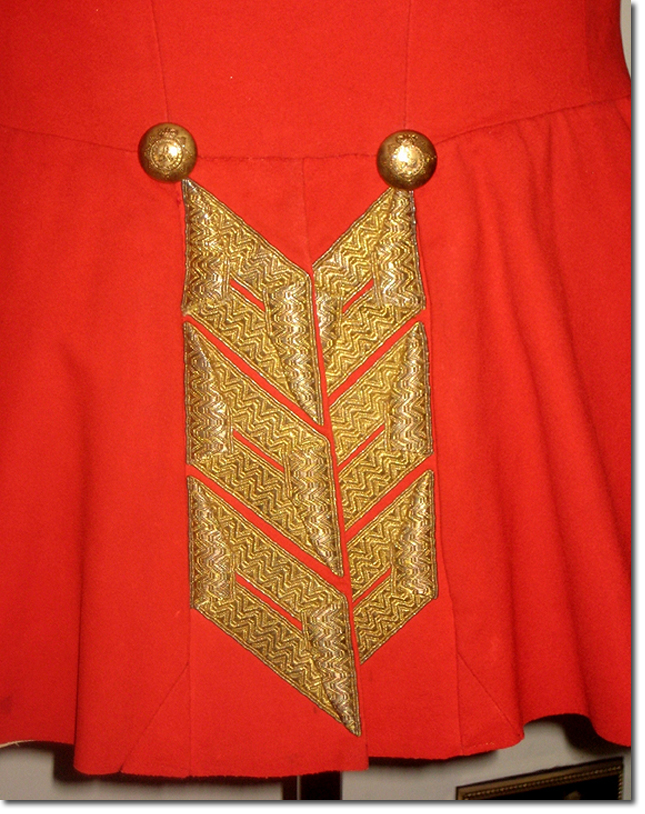
The skirts were 9 inches deep for an officer 5’9” high, varying in length according to the officer’s height. They were lined with white and decorated with three loops of three quarter inch gold lace, quilted at the ends and forming chevron shapes whose upper points touched two buttons on the waist. The pouch-belt and waist-belt are of similar pattern gold lace but the pouch-belt was two and half inches wide and the waist-belt one and half inches wide, both edged with blue velvet.