

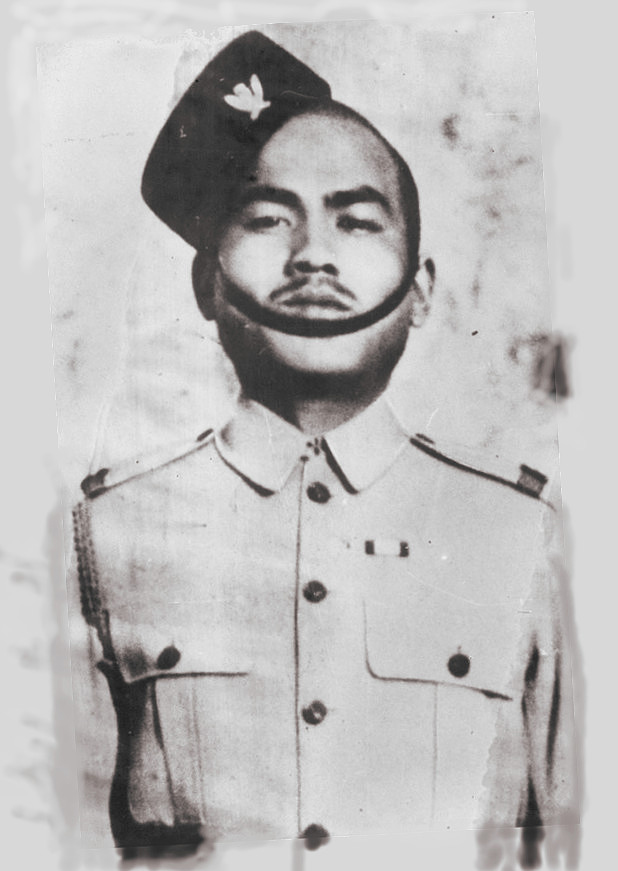
In the summer of 1944, the 5th Gurkhas were fighting in Burma. Acting Subadar Netrabahadur Thapa was in command of a position known as Mortar Bluff, one of two outposts manned by the 2nd Battalion, 5th Gurkha Rifles of the 17th Indian Division. The other outpost, Water Piquet, 400 yards away, had been captured by the Japanese the previous night. Their task was to block the Japanese advance towards Imphal and Assam. Thapa had 41 men when the enemy attacked on 25 June 1944.
The Japanese opened with artillery fire and followed with infantry assaults. Throughout the fighting Netrabahadur encouraged his men and tended the wounded. During a lull he radioed for artillery support. The next attack, in torrential rain, was ferocious. One part of Mortar Bluff was overrun when a machine-gun jammed.
Unable to send help, Netrabahadur went himself, throwing grenades and forcing the enemy back. The outpost was now desperately low on ammunition and riflemen fit for action, but he radioed HQ that he intended to hold out. Completely surrounded, the Subadar’s determined defence kept the Japanese at bay.
At 4am the next morning a section of eight men managed to reach the position with grenades and ammunition, but the Japanese detected them and attacked, killing or wounding all eight. Netrabahadur retrieved the grenades and ammunition himself and led a final charge during which he was shot in the mouth. He was killed by a grenade. His body was found the next day, kukri in hand, beside a dead Japanese soldier he had cut down.
Netrabahadur Thapa was born in Rahu village, Bhirkot, Nepal, on 8 January 1916. He had served on the North-West Frontier and was a Jemadar when the Second World War began. At Mortar Bluff he was an Acting Subadar. He was gazetted posthumously for the Victoria Cross on 12 October 1944. His widow received the medal from Lord Wavell at a ceremony on 23 January 1945.

