

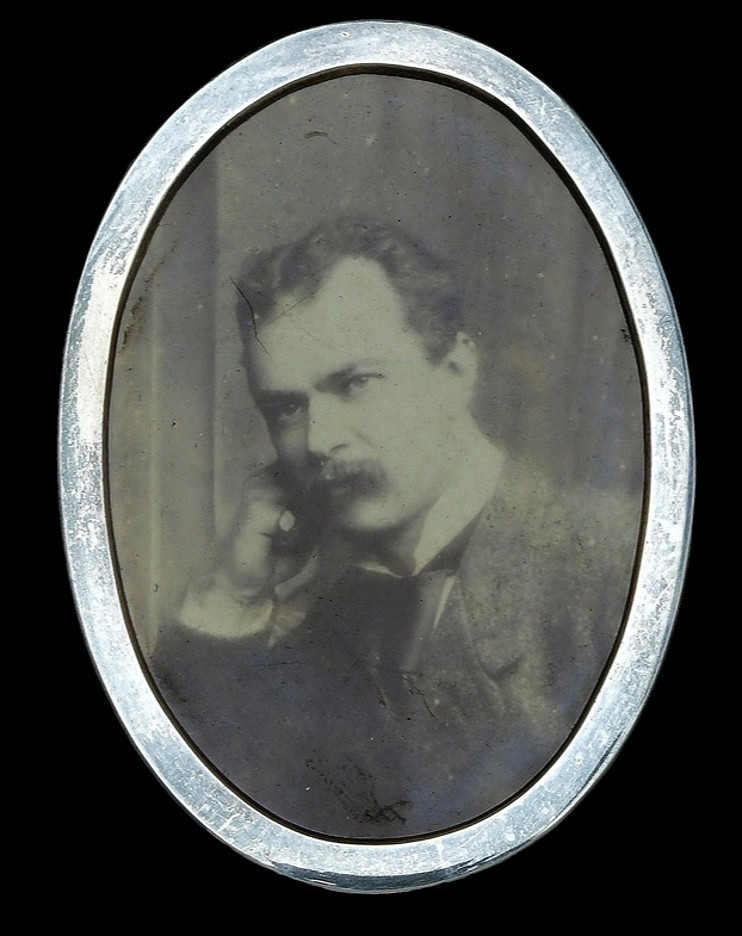
Alexander Pringle Samuells was born on 8 Aug 1843, at Muzaffarpur, Tirhut, India. He was the third son of Edward Alexander Samuells CB of the Bengal Civil Service. He was educated in Britain and returned to India in 1860, serving in the 4th European Bengal Regiment until it was disbanded in Nov 1861. He then served in the 104th Foot until 1863 when he was placed in the 1st Punjab Infantry. He was attached to the 7th Royal Fusiliers in the Yusafzai Field Force and went with them to Ambela and fought in the actions at Lalu on 15 Dec 1863 and Ambela on 16 Dec.
Samuells transferred to the 32nd Punjab Pioneers in 1864 and fought in the Bhutan campaign of 1864-65. The regiment then constructed the Ranikhet road and he was with them during the Bengal Famine Relief Works of 1874. The 32nd went to Quetta in 1877 and Samuells was appointed Wing Commander, supervising work on the Quetta fortifications and in the Bolan Pass. In the 2nd Afghan War he served with the regiment throughout 1878-80 in southern Afghanistan. He was second in command for some of the time, during the advance over the Khojak Pass, the occupation of Kandahar and the reconnaissance to Girishk on the Khojak. The 32nd was part of the expedition against the Kakur tribes in the Thai-Chotiali country.
When Lieutenant-Colonel Fellowes died on the return march Captain Samuells once more assumed second in command. But his health suffered during the hard campaigning, and in the hot weather he became seriously ill with dysentery and fever. But he accompanied the regiment to the Khyber Pass and Jellalabad Valley in 1879 and remained with them until July 1880. But by that time he was invalided back to India where he died of hospital abscess at Rawalpindi on 7 July 1880.
He had been a conscientious and popular officer taking good care of his men, whatever their rank. He was proficient in Military Law and passed the exams for Staff College. The sepoys of his company erected a memorial over his tomb. He was married in 1874 to Georgina Margaret Paterson from Huntly, Perthshire.
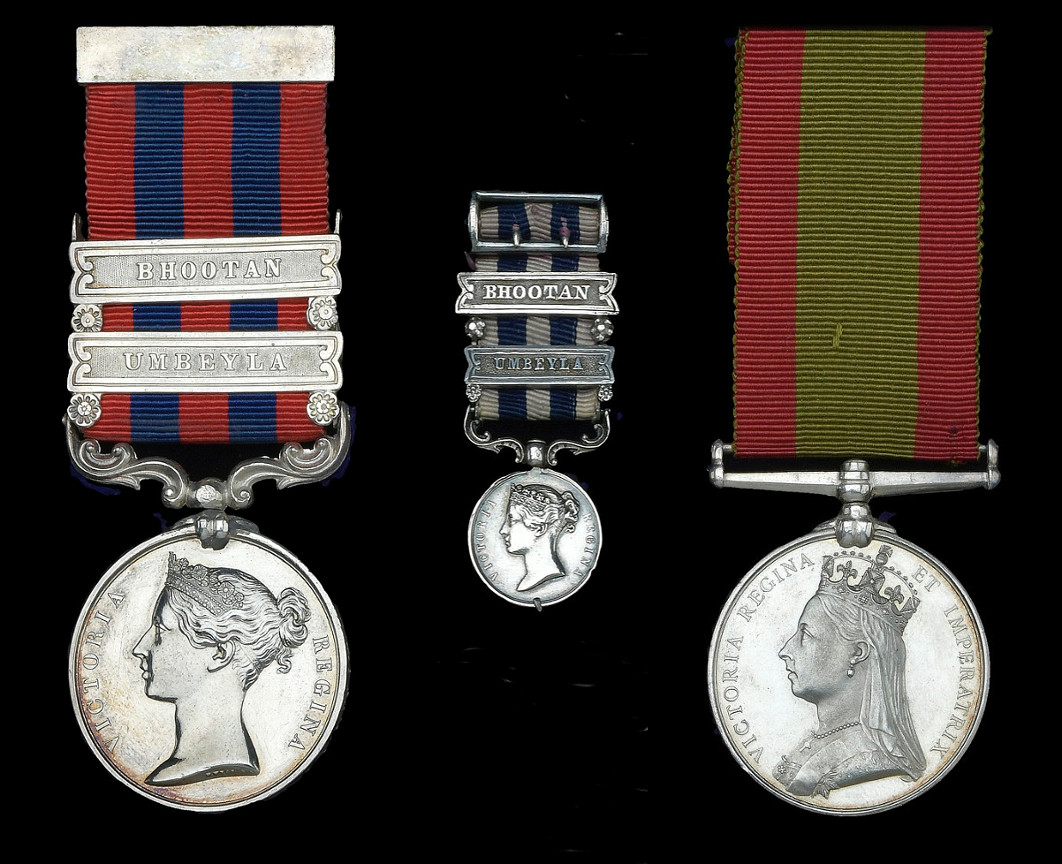
The India Medal 1849-1895 has a blue and red striped riband. The silver medal showed the head of a young Queen Victoria while the reverse has winged Victory crowning a seated warrior with a laurel wreath. Samuells gained the clasp for UMBEYLA (Ambela) while serving with the 7th Royal Fusiliers in the Yusafzai Field Force. He earned the clasp for BHOOTAN (1864-66) when he was an officer in the 32nd Punjab Pioneers.
The central medal is a miniature version of the India Medal which was more convenient to wear for everyday duty. However, the riband is striped blue and white. Captain Samuells died during the 2nd Afghan War so the right-hand medal for Afghanistan 1878-80 was awarded posthumously.
