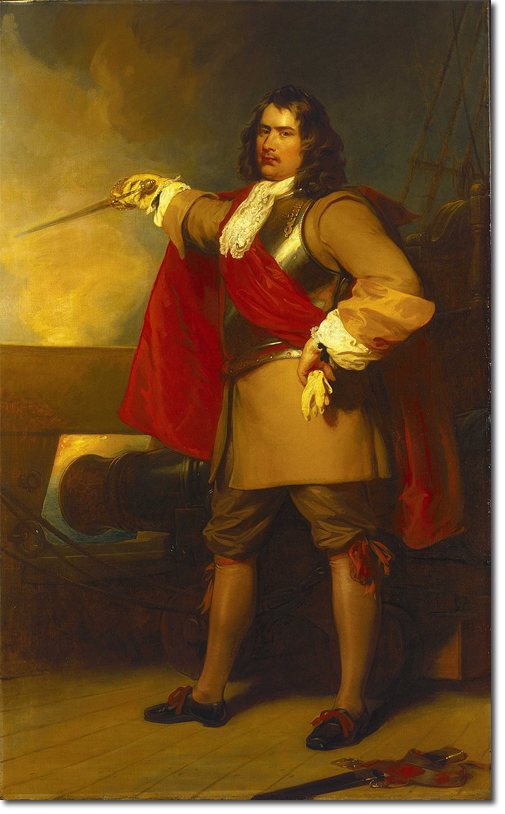
Robert Blake had made a name for himself as the stout defender of Taunton during the English Civil War. However, his connection to Plymouth was from when he was promoted to Admiral of the Parliamentary Fleet. He used Plymouth as his base to hunt down the newly formed Royalist Fleet under Prince Rupert which had been created in 1648 after a mutiny of Parliamentarian ships under another commander with strong links to Plymouth; William Batten.
Robert Blake pioneered long term blockades of ports far from England as he attempted to subdue Prince Rupert who was using the Tagus River as a base to privateer against Parliamentarian warships and merchantmen. Previously, blockades were called off in winter but Blake established a connection back to Plymouth and other English ports to sustain a year round supply of ships and crews to monitor and react to the Royalist threat.
Robert Blake made his name fighting the Dutch in the 1650s but his connection to Plymouth actually takes place after peace had been achieved with the Dutch and war had been declared against Spain. Blake had learnt a great deal fighting against the maritime power of the Low Countries with their impressive Admirals and experienced crews.
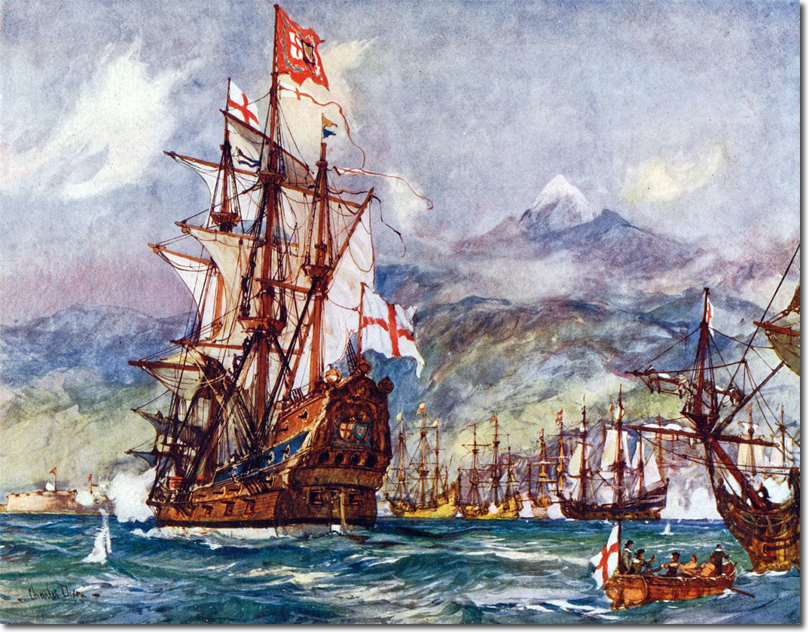
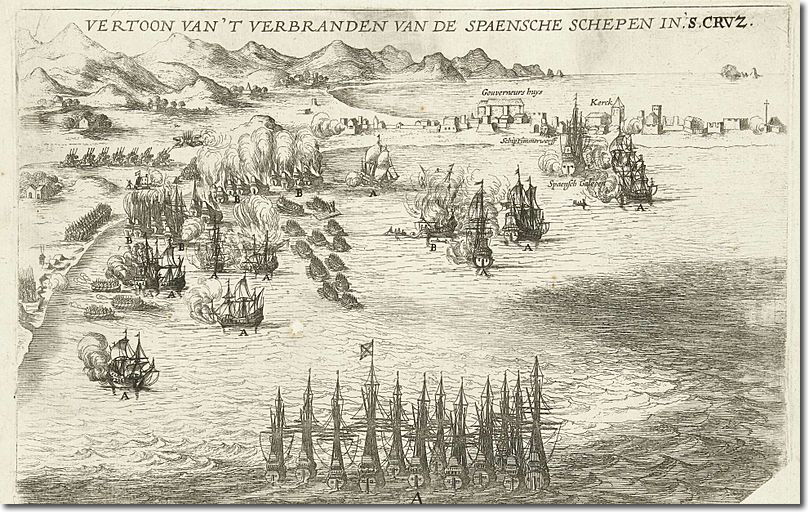
His greatest triumph came in 1657 when he caught the Spanish Treasure fleet in harbour in Santa Cruz in Tenerife. The Spanish had assumed they were safe under the guns of the fort there but in a remarkably daring attack, Blake put his own ships so close to the Spanish ships it made it almost impossible for the Spanish fort to open fire effectively. Fittingly the first ship to open fire was the 'Plymouth'. Despite the temptations of the Treasure ships, Blake was able to marshal out all of his ships whilst the vast bulk of the Spanish fleet (17 ships) had been sunk or was on fire. This was a catastrophe for Spain and led to them having to abandon their recently instigated invasion of Portugal for lack of funds. It also elevated the status of the Commonwealth of England to one of the premier fighting powers of Europe. In short succession it had taken on both the Dutch and the Spanish and emerged victorious.
Sadly Blake was to die at the apogee of his success as he entered Plymouth Sound after his triumphant victory at Santa Cruz. He had received a wound back at the Battle of Portland against the Dutch that had never really healed. He also suffered from a very painful kidney stone. He had been in considerable pain for some time and his death was not unexpected. His internal organs were buried at St. Andrew's Church in Plymouth whilst his body was interred at Westminster Abbey with a full State Funeral headed by Oliver Cromwell. His body was later moved out of the Abbey to the next door St Margaret's Church on the orders of Charles II in 1661.