

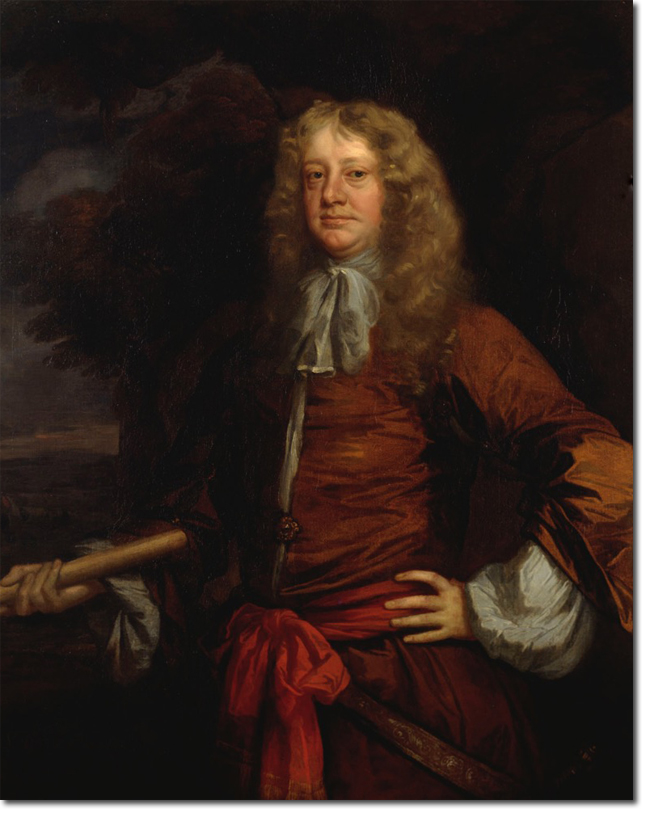
Sir George Ayscue was appointed admiral of the Irish seas in 1649 as the Second Civil War threatened to bring Irish forces under the Marquess of Ormond on to the mainline. There was also extensive privateering. He was thanked by Parliament for his part in keeping open the sea route to Dublin under siege by Confederates and Royalists. In 1651 he fitted out a fleet to travel over to the Caribbean to bring recalcitrant colonies under Parliamentarian control. However before he could depart a new threat appeared in the Scilly Isles where a Royalist garrison and privateers were operating. However Parliament was more concerned with the threat of a Dutch invasion of the islands. Ayscue was despatched alongside the main Parliamentary Admiral Robert Blake to seize the islands for Parliament from April to May of 1651. Fortunately the Dutch under Admiral Tromp were found to be attempting to retrieve captured ships and crew from Royalists privateers and if anything were willing to help Parliament. A vicious assault was planned taking some of the smaller islands before heading to the main island of St. Marys. Eventually the Royalist Governor Sir John Grenville sued for terms and the islands were secured for Parliament.
Ayscue was then able to set sail for Barbados on 5 August 1651. Despite stiff resistance from the royalist governor, Lord Willoughby of Parham, which ruled out a direct assault, Ayscue eventually obtained the island's surrender on 11 January 1652 with an element of bluff and diplomacy. His mission was very successful and he was able to bring all the islands and mainland American colonies back under Parliamentary control before Princes Rupert and Maurice arrived with their small Royalist fleet in 1652.
Ayscue's fleet returned to Plymouth on 25 May 1652 to find the First Anglo-Dutch War had begun. On 12 June he engaged an outward-bound Dutch fleet off the Lizard, but this got away with only five losses. Early in July, acting on intelligence that a Dutch convoy of about forty ships was attempting to sail home up the channel, Ayscue intercepted them near Calais with nine ships, including his flagship the Rainbow, and drove most of them ashore. However, on 8 July he learned that Tromp's Dutch fleet was approaching the Downs, and resolved to fight despite having only twenty ships against Tromp's sixty. Shore batteries were prepared at Deal and fireships fitted out at Dover to support Ayscue's precarious position. The Dutch moved towards him on 11 July but were hampered by light winds; when the wind freshened from the south-west, the Dutch moved away to pursue Blake's main fleet, which had gone north. As commander of the channel squadron with his flag now in the George, Ayscue escorted the homecoming East India ships into Plymouth at the end of July, where he learned that another Dutch fleet under De Ruyter was approaching. Ayscue caught up with him between Plymouth and Guernsey on 16 August. Each side overestimated the strength of the other, and the fighting was confused; Ayscue seems to have attacked the Dutch centre but was not supported by all the armed merchantmen in his fleet, and his remaining ships were badly damaged in close-quarter fighting. Despite losing no ships outright, the English withdrew to Plymouth hotly pursued by De Ruyter, who intended to attack them in their anchorage, but a change of wind forced him to withdraw. Nevertheless, he got his convoy through and kept the seas.

